How to Get a Bus Driver Licence in Australia

Published: March 19, 2026

Share this post:

Facebook
WhatsApp
LinkedIn

To drive a bus commercially in Australia you need an MR (Medium Rigid) or HR (Heavy Rigid) driver licence plus driver accreditation from your state transport authority. There is no separate “bus licence” – buses fall within the standard heavy vehicle licence classes. In Victoria, accreditation is issued by Safe Transport Victoria and is required for all route, school, and charter bus work. The full process takes a minimum of 13 to 26 months from a car licence, depending on which licence class you pursue first.

How to Get a Bus Driver Licence in Australia

  1. Hold a full car licence – in Victoria, hold a full (non-probationary) licence for at least 12 months before applying for MR, or 24 months before applying for HR.
  2. Get your MR or HR licence through a registered RTO – MR for two-axle buses, HR for three-axle and articulated buses. Most employers prefer HR.
  3. Apply for driver accreditation through Safe Transport Victoria – required for any commercial bus service including route buses, school buses, and charter services.
  4. Complete a medical assessment – part of the accreditation application, repeated every three years.
  5. Pass a national criminal history check – conducted as part of the ST Vic accreditation process.
  6. Obtain a Working With Children (WWC) clearance if you intend to drive school services.
  7. Complete employer induction – bus operators typically run their own route familiarisation training before you drive solo.

There Is No Separate “Bus Licence” in Australia

This surprises a lot of people. There is no standalone bus licence class in Australia.

Heavy vehicle driver licences are issued for all vehicles above 4.5 tonnes GVM in five categories – Light Rigid (LR), Medium Rigid (MR), Heavy Rigid (HR), Heavy Combination (HC), and Multi Combination (MC) – and buses fall within these existing classes depending on their size and axle configuration.

To drive a bus, you need the MR or HR licence class that matches the vehicle you will be operating.

On top of that, if you are working commercially – driving route buses, school buses, charter services, or courtesy buses with more than 13 passenger seats – you also need driver accreditation from Safe Transport Victoria.

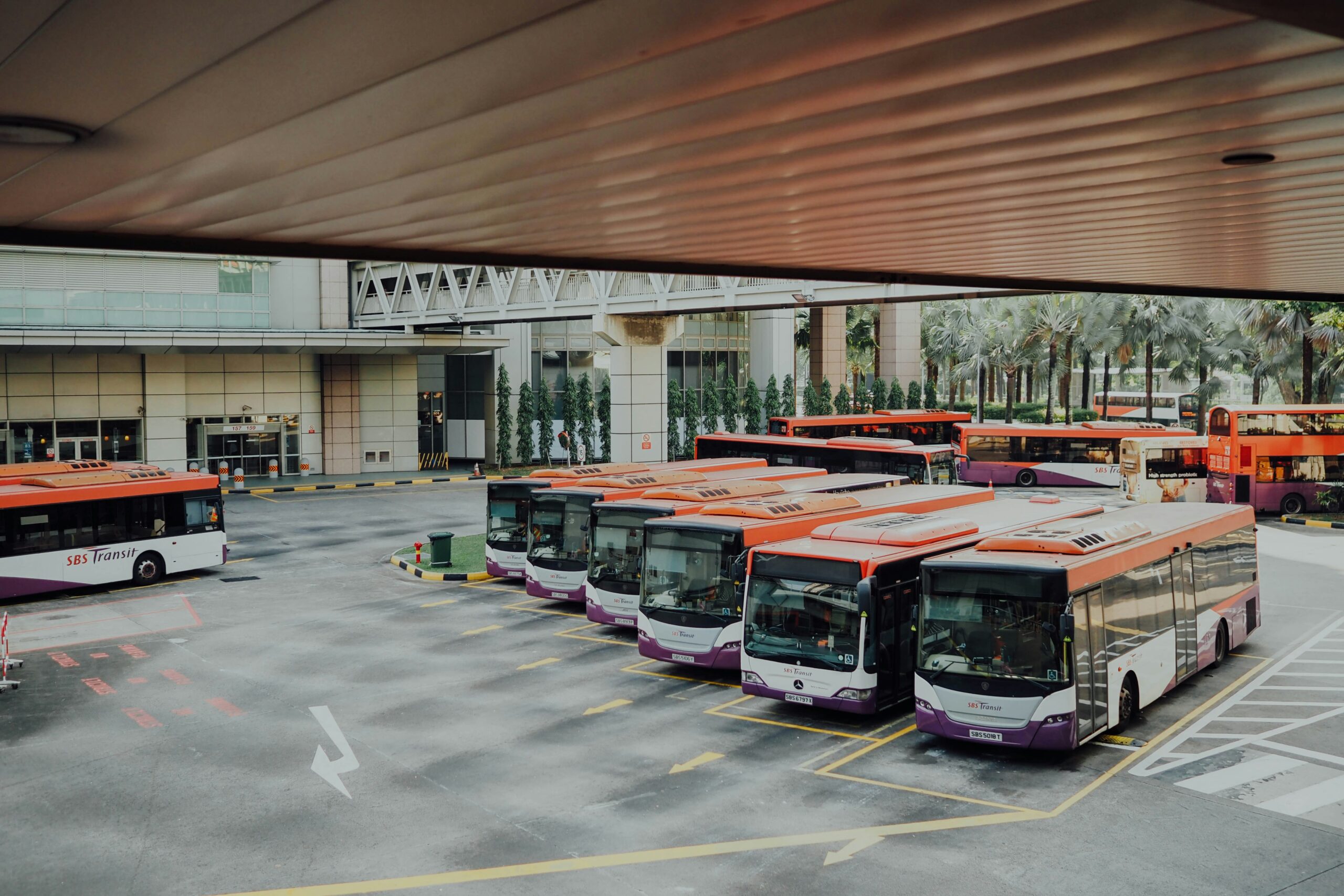
bus in carpark
Licence Pathway to Bus Driving - Victoria
Licence Pathway - Victoria
Car
Licence
Class C
Hold 12 mths (MR) or 24 mths (HR)
Medium Rigid
2-axle buses. Entry point for most roles
HR
Heavy Rigid
3-axle buses. Preferred by employers
+
Driver
Accred.
ST Vic Accreditation
Required for all commercial bus work
HR is the recommended target licence. Most Victorian employers prefer HR over MR for all bus roles.
Which Licence Do You Need to Drive a Bus?

Which Licence Do You Need to Drive a Bus?

The right licence depends on the type of bus. Here is how it breaks down in Victoria:

LR

Light Rigid

Covers minibuses between 4.5 and 8 tonnes GVM. Used for small shuttle buses and some aged-care transport. Not sufficient for most bus driver employment.

Medium Rigid

Covers rigid vehicles over 8 tonnes GVM with two axles. Covers standard public buses and most school buses. Minimum licence for most bus driver roles.

HR

Heavy Rigid

Covers rigid vehicles over 8 tonnes GVM with three or more axles. Required for large coaches and articulated buses. Most employers prefer or require HR.

HC / MC

Not Required

These cover articulated truck combinations such as semi trailers and B-doubles. Not required for standard bus work.

Should You Get MR or HR?

 
Most route bus and public transport roles in Victoria require an MR licence at minimum, but the majority of employers prefer HR. The HR test covers the same skills as MR but in a larger, three-axle vehicle. Getting HR from the start puts you ahead and covers all rigid bus types including articulated buses. The cost difference is modest and the broader coverage is worth it.

Manual vs Automatic Bus Licence

Your MR or HR licence in Victoria may carry a transmission condition. Condition A covers automatic; condition B covers synchromesh. Most modern buses use automatic gearboxes, but some older school buses and regional coaches use synchromesh or manual transmissions.

An unrestricted (condition B) licence opens up more employment options and costs little extra. Confirm with your training provider what vehicle is used in the assessment, and check with any prospective employers what transmission their fleet runs before you book your course.

How Much Does the Licence Training Cost?

How Much Does the Licence Training Cost?

MR
$700 - $1,300
MR licence training
1 day, auto/synchro
Med
$100 - $200
Medical certificate
GP double appointment
ST Vic
$76.30
Driver accreditation
application (one-off)
Costs are current as of 2025-26. Many Victorian bus operators fund or subsidise MR/HR licence upgrades for drivers they recruit. Always ask whether the employer will cover licence costs before self-funding.

Driver Accreditation – The Extra Step for Bus Work

Having an MR or HR licence gets you licensed to drive the vehicle. But to work commercially – driving route buses, school buses, charter coaches, or any local bus service – you also need driver accreditation from Safe Transport Victoria (ST Vic).

This is a separate requirement under the Bus Safety Act 2009. You need accreditation if you are operating a commercial bus service, a commercial minibus service, a tour and charter service, or a local bus service including public service buses and contracted school bus services.

Who Must Hold Driver Accreditation in Victoria?

You must hold accreditation if you drive commercially for: route services (including public service buses or contracted school buses), demand-responsive services, tour and charter services, or courtesy buses with more than 13 passenger seats. You do not need accreditation for private, non-commercial driving.
Accreditation Process and Fees

The Accreditation Application Process

1
Step 1 - Sign up to the ST Vic user portal
Apply online at safetransport.vic.gov.au. Create an account or log in to begin your application.
2
Step 2 - Confirm your identity
Upload a selfie holding your current Victorian driver licence plus required identity documents such as a passport or birth certificate.
3
Step 3 - Complete your medical assessment
Book a double GP appointment - the commercial medical takes longer than a standard consultation. The medical check is repeated every three years once you are accredited.
Step 4 - Pay the application fee ($76.30)
Paid by card through the user portal. The annual renewal fee is $34.00 per year. Medical costs are separate and are the applicant's responsibility.
Step 5 - Processing (minimum 20 business days)
ST Vic cannot fast-track applications due to police and medical checks. You will be contacted if additional documents are needed or if your application is refused.

Accreditation Fees (Safe Transport Victoria)

Fee Type Current Fee Notes
Application for bus driver accreditation $76.30 One-off application fee
Bus driver accreditation annual fee $34.00 per year Payable each year to maintain accreditation
Mutual recognition (interstate drivers) $29.40 For drivers already accredited in another state
Fees sourced from safetransport.vic.gov.au. Medical costs are the applicant's responsibility and are separate.

Working With Children Check

If you intend to drive school buses or any service carrying children, you must hold a current Working With Children (WWC) clearance for paid employment. This is a legal requirement in Victoria and is separate from the driver accreditation process.

The Department of Education requires that bus operators ensure all school bus drivers hold a current WWC clearance before working with students. A volunteer clearance is not sufficient – you need the employment clearance. Apply through the Department of Justice and Community Safety before you start school bus work.

What Does a Bus Driver Do?

The day-to-day reality of bus driving depends heavily on the type of work. A metropolitan route bus driver in Melbourne has a very different shift to a school bus driver in regional Victoria or a charter coach driver on a long-haul run. Most bus driver roles do share common responsibilities though.

At its core, the job is about moving passengers safely and on time. Beyond driving, bus drivers manage pre-start vehicle checks, monitor passenger safety, handle fare collection on route services, complete fatigue logs where required, and report defects and incidents to the operator.

kids getting on bus
Bus Driver Duties and Jobs in Victoria

Common Duties of a Bus Driver

Completing pre-start vehicle safety and condition checks each shift
Operating the bus safely and in line with traffic laws and operator procedures
Managing fare collection and ticketing systems on route services
Assisting passengers including those with mobility impairments
Completing work diaries and fatigue records where required under HVNL
Reporting vehicle defects, incidents, and near misses to the operator
Supervising student welfare on and off school buses
Communicating with depot supervisors and dispatch throughout the shift

Types of Bus Driver Jobs in Victoria

  • Metropolitan route bus driver - operating scheduled public bus services in Melbourne and surrounding urban areas. Regular rosters, shift work including early mornings and late nights. Employed by operators contracted to Transport for Victoria.
  • School bus driver - school term work, typically split shifts (morning and afternoon runs). Hours are lower than full-time driving but the work is part-time by nature. Requires a WWC clearance.
  • Charter and tour coach driver - driving groups for events, tourism, corporate transfers, and sporting trips. More variable hours, often includes weekend work. Can involve long-distance interstate runs.
  • Aged care and disability transport - smaller vehicles, community-based runs. Often uses MR-class vehicles. Requires patience and a high standard of care for passengers.
  • Airport and hotel shuttle driver - regular short runs between terminals, hotels, and car parks. Often permanent or part-time casual positions with consistent hours.
  • Regional and country bus driver - covering routes in regional Victoria. Can involve multi-stop long-distance runs across the Wimmera, Gippsland, and other regional areas.

Bus Driver Jobs in Victoria - What to Expect

Victoria Spotlight

Where Bus Driver Work Is in Victoria

  • Melbourne metropolitan network - the largest single source of bus driver employment in Victoria. Operators contracted to Transport for Victoria run hundreds of routes and are consistently hiring.
  • Melbourne's growth corridors - outer suburbs in the north, west, and south-east are growing fast. Operators in Werribee, Craigieburn, and Pakenham are active recruiters.
  • Regional cities - Geelong, Ballarat, Bendigo, and Shepparton all have local bus networks with ongoing driver demand.
  • School bus networks - rural and regional Victoria relies heavily on contracted school buses. The Department of Education's School Bus Program services thousands of students, and driver turnover creates regular vacancies.
  • Charter and tourism - Melbourne-based charter operators run services to regional Victoria, Phillip Island, and the Yarra Valley. Experienced HR drivers with good customer service skills are well placed.
Pay and FAQ - Bus Driver Victoria

Victoria is a strong market for bus drivers at every level. Entry-level MR drivers can find school bus and shuttle work relatively quickly, while HR-qualified drivers with driver accreditation are in demand across metro route, charter, and regional roles.

One advantage of bus driving over long-haul truck driving is that most Victorian roles are residential - you are home every night and working a regular roster. Even charter driving, while it can involve long days, rarely requires extended time away from home.

Tip for Victorian Bus Driver Candidates
Many Victorian bus operators - particularly those contracted to operate public transport routes - will fund your MR or HR licence upgrade if you have a clean driving record and pass their pre-employment screening. Apply directly to operators and ask about licence sponsorship before paying for training yourself.

What's the Pay Like for Bus Drivers?

Pay varies by role type, employer, and hours. The figures below are based on current data from Indeed (updated April 2026) and SEEK salary data for Victoria.

School bus driverpart-time, term only
$22k - $36k/yr
Metro route driverfull-time, shift work
$70k - $85k/yr
Charter/coach drivervariable hours
$72k - $95k/yr
Experienced HR drivermetro VIC with penalties
$75k - $95k/yr
Role Type Typical Hourly Rate Approx. Annual Pay Notes
School bus driver (part-time) $28 - $38/hr $22,000 - $36,000 School terms only; typically 4 hrs/day split shift
Metropolitan route bus driver $35 - $42/hr $70,000 - $85,000 Shift work including nights and weekends; penalty rates apply
Charter/coach driver $35 - $45/hr $72,000 - $95,000 Variable hours; can include weekends and long days
Experienced HR driver (metro VIC) $37 - $46/hr $75,000 - $95,000 Experienced route bus drivers including penalty rates

According to Indeed, the average bus driver wage in Victoria is around $37.07 per hour across all roles and experience levels. Full-time metropolitan route bus drivers, including penalty rates for early mornings, late nights, and weekends, can push well above $80,000 per year in total take-home pay.

Under enterprise agreements covering most Victorian bus operators, employed drivers receive penalty rates for shift work outside standard hours. These loadings can significantly lift effective pay above base hourly rates, particularly for drivers working early morning or overnight shifts.

Is Bus Driving the Right Career for You?

If you want steady, residential work with a genuine public service element and without the need for a university degree, bus driving is a sound choice. The job requires patience, reliability, and genuine care for passengers - the satisfaction of the role comes from doing it well and safely every day.

In Victoria especially, the combination of a growing metropolitan bus network, consistent regional demand, and school bus opportunities across the state means there is work at every experience level. Getting your MR or HR licence now and applying for driver accreditation as soon as you have it puts you in front of employers who are actively hiring.

Frequently Asked Questions

There is no separate bus licence in Australia. You need an MR (Medium Rigid) or HR (Heavy Rigid) licence depending on the size and axle configuration of the bus. MR covers two-axle buses over 8 tonnes GVM; HR covers three-axle and articulated buses. Most employers prefer HR. On top of the vehicle licence, you also need driver accreditation from your state transport authority if you are working commercially.
Yes, if you are driving commercially. Safe Transport Victoria requires driver accreditation for anyone operating route services, school bus services under contract, demand-responsive services, tour and charter services, or courtesy buses with more than 13 seats. The application fee is $76.30 and the annual renewal is $34.00. Applications take a minimum of 20 business days due to police and medical checks.
MR or HR licence training takes one to two days through a registered RTO. However, you must have held a full car licence for 12 months (MR) or 24 months (HR) before you can apply. After you have your licence, the driver accreditation application takes at least 20 business days. From a full car licence, you are looking at a minimum of 13 to 26 months before you can start commercial bus work, depending on the licence path you take.
According to Indeed, the average bus driver wage in Victoria is around $37 per hour. Metropolitan route drivers typically earn $70,000 to $85,000 annually in full-time roles including penalty rates. School bus drivers work part-time (typically four hours per day during school terms) and earn around $22,000 to $36,000 annually. Charter and coach drivers can earn up to $95,000 depending on hours and experience.
Yes. The Victorian Department of Education requires bus operators to ensure all school bus drivers hold a current Working With Children clearance for paid employment before working with students. A volunteer clearance is not sufficient. Apply through the Department of Justice and Community Safety before you start school bus work.
Many do. A number of Victorian bus operators - particularly those running metropolitan route services under contract to Transport for Victoria - offer to fund MR or HR licence upgrades for suitable candidates. Always contact operators directly and ask about licence sponsorship before paying for training yourself. Large operators such as Transdev, Kinetic, and CDC Victoria regularly advertise for trainee drivers.
Picture of Chris Davis

Chris Davis

Head of Sales & Business Development

Chris writes about trucking, logistics, and transport industry trends.